ACC’s Rising Basketball Fortunes
Tied To Sensational Freshman Class
By David Glenn
North Carolina Sports Network
(last updated Jan. 28, 2026)
In recent seasons, fewer freshmen dominated in college basketball, as the sport overflowed with older participants in the post-COVID era.
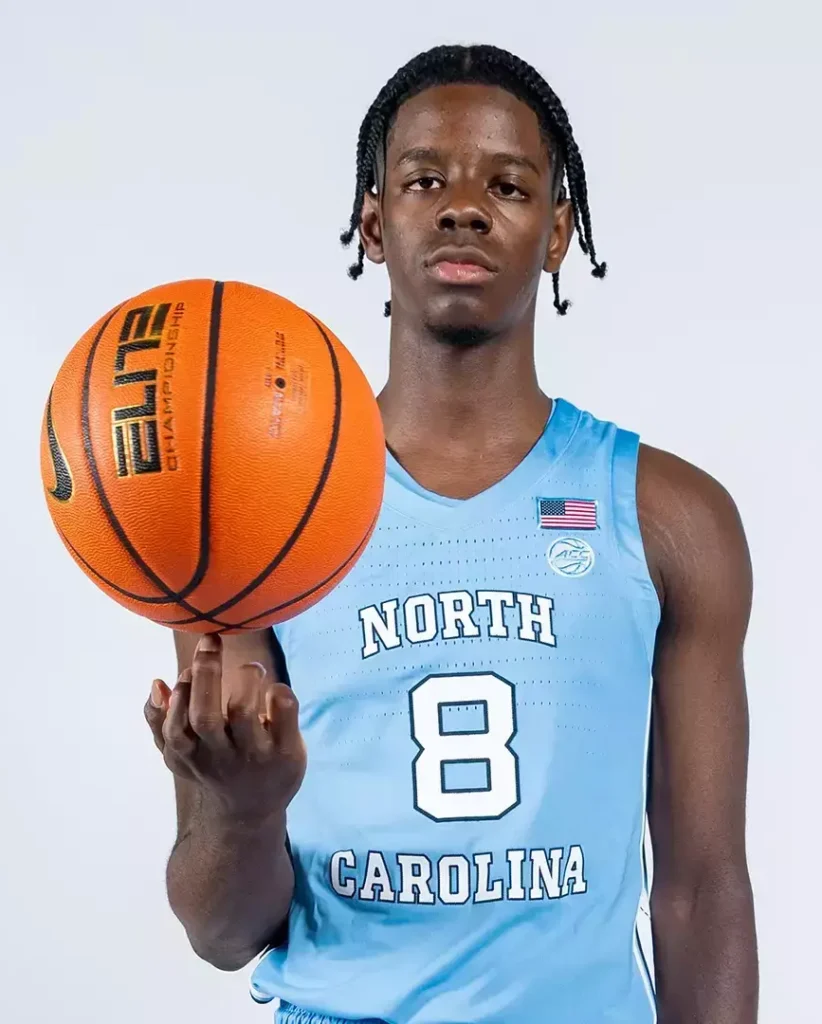
Bucking that trend here in the 2025-26 season, the Atlantic Coast Conference has produced an absolutely sensational and highly impactful freshman class, led by a high-profile pair of former prep All-Americans in Duke forward Cameron Boozer and UNC forward Caleb Wilson and also including a handful of other fantastic first-year standouts.

A combination of factors — including the NCAA’s COVID-related extra/bonus year of eligibility, the expansive use of redshirt campaigns (medical or otherwise), parents holding their star athletes back a year during their prep careers, and most recently the influx of European professionals in their early 20s — recently led to older college rosters, including the proliferation of fifth- and sixth-year seniors and even occasionally seventh- and eighth-year (seriously) seniors.
Those developments, in turn, combined to make it more difficult (but not impossible) for the so-called “diaper dandies” to dominate during their initial year on campus.
When Duke freshman Cooper Flagg (then 18 years old) won the sport’s National Player of the Year honor last spring, his main competition included 24-year-old Kansas center Hunter Dickinson, 24-year-old Villanova forward Eric Dixon, 23-year-old Alabama guard Mark Sears, 23-year-old Creighton center Ryan Kalkbrenner and 23-year-old Marquette guard Kam Jones, most of whom were in their fifth year at the college level.
In the ACC, which decades ago regularly produced national Freshman of the Year honorees such as Georgia Tech point guard Kenny Anderson (1990), Wake Forest forward Rodney Rogers (1991), Maryland forward Joe Smith (1994), Duke forward Luol Deng (2004), UNC forward Marvin Williams (2005) and UNC forward Tyler Hansbrough (2006), it’s been very difficult lately for freshmen just to make the 15-man all-conference team.
In 2022, only two of the 15 All-ACC honorees were freshmen. In 2023 and 2024, only one rookie made the team in each season. Last year, only Flagg (first team) and fellow Duke newcomer Kon Knueppel (second team) got the nod.

That All-ACC picture looks much different this time.
In addition to Boozer (the top candidate for National and ACC Player of the Year) and Wilson (who could join Boozer as a first-team All-American), who are both virtual locks for the 2026 All-ACC first team, Virginia forward Thijs De Ridder, Stanford guard Ebuka Okorie and (when healthy) Louisville point guard Mikel Brown Jr. also rank among the best players in the conference and the top 10 freshmen in the entire country.
By this point, college basketball fans know plenty about Boozer and Wilson.
Boozer, a 6-foot-9, 250-pounder and a son of Duke legend Carlos Boozer, is averaging about 23 points and 10 rebounds per game. Following in Flagg’s footsteps, the 18-year-old Boozer often serves as a “point forward” on offense for the Blue Devils, as he’s also averaging a team-best four assists per game.
Wilson, who is averaging about 20 points and 11 rebounds per game, ranks alongside Boozer and BYU forward AJ Dybantsa as another of the three or four best first-year college players in America, all of whom are well on their way to earning NBA lottery status this summer.
But wait, there’s more — much more.

De Ridder, who is about to turn 23 years old — yes, 23 — is a 6-foot-9, 238-pound freshman forward from Belgium who had been playing in Spain’s top professional league before joining first-year UVa coach Ryan Odom in Charlottesville. De Ridder is leading the Cavaliers with 16 points per game, while shooting 54 percent from the field and 40 percent from 3-point range.
If the 15-man All-ACC team was selected today, De Ridder and Okorie — like first-teamers Boozer and Wilson, obviously — would be on it somewhere.
Brown, a highly touted point guard who has been slowed by a back injury, nevertheless already has showcased — in spurts — why he also is expected to be an NBA lottery pick this summer. He’s 6-5 and 190 pounds, and while he’s not a great perimeter shooter at this stage of his career, he’s averaging about 16 points and five assists per game for the Cardinals when healthy. It was not mere coincidence that, at one point earlier this season, Louisville was 9-1 when Brown did play and just 3-4 when he didn’t.

Finally, whereas Boozer, Wilson, De Ridder and Brown all arrived in the ACC this season with huge expectations, either as a prep All-American or a well-established European standout, Okorie has been one of the most pleasant first-year surprises in the entire country.
A 6-2, 185-pound guard, Okorie is the Cardinal’s leading scorer and top assist man, with averages of 22 points and three assists per game.
Whereas Boozer, Wilson and Brown all ranked among the top 10 players in last year’s high school senior class, Okorie barely cracked the top 100. He was the 2025 high school player of the year in New Hampshire as a prep senior, and Stanford coach Kyle Smith raved in the preseason about his long-term potential, but nobody expected Okorie (who originally committed to play for Harvard, in the Ivy League) to be among the top players in the ACC — and one of the top 10 freshmen in the entire country — pretty much from the first time he put on a Stanford uniform.
In late January, Duke (#4), UNC (#16), Virginia (#17) and Louisville (#20) were the ACC’s four highest-ranked teams.
In all four cases, the true freshman superstar still will need plenty of help down the stretch to get his team where it wants to go, but their sensational starts have the ACC in a much better place than it has been, collectively, since before COVID contributed to a slew of huge changes in the modern college basketball world.

(Recruiting Ranking As Prep Senior In Parentheses)Duke F Cameron Boozer (#3): 23 ppg, 10 rpg, 4 apg
UNC F Caleb Wilson (#5): 20 ppg, 10 rpg
Stanford G Ebuka Okorie (#100): 22 ppg, 3 apg
Virginia F Thijs De Ridder (NR): 16 ppg, 40% threes
Louisville PG Mikel Brown Jr. (#8): 16 ppg, 5 apg
Miami F Shelton Henderson (#23): 14 ppg, 5 rpg
Notre Dame G Jalen Haralson (#17): 15 ppg, 4 rpg
Virginia Tech PG Neo Avdalas (#50): 13 ppg, 5 apg
Georgia Tech C Mouhamed Sylla (#105): 10 ppg, 7 rpg
Virginia PG Chance Mallory (#64): 10 ppg, 4 apg
Pitt F Roman Siulepa (NR): 10 ppg, 5 rpg
NC State G Matt Able (#26): 8 ppg, 36% threes
Virginia C Johann Grunloh (NR): 8 ppg, 7 rpg
SMU F Jaden Toombs (#41): 8 ppg, 4 rpg
UNC PG Derek Dixon (#44): 6 ppg, 43% threes
Syracuse G Kiyan Anthony (#34): 9 ppg
Georgia Tech G Akai Fleming (#122): 9 ppg
NOTE: Recruiting ranking as high school senior from 247 Sports Composite. Most international players (e.g., De Ridder, Grunloh, Siulepa) are not included in those rankings.